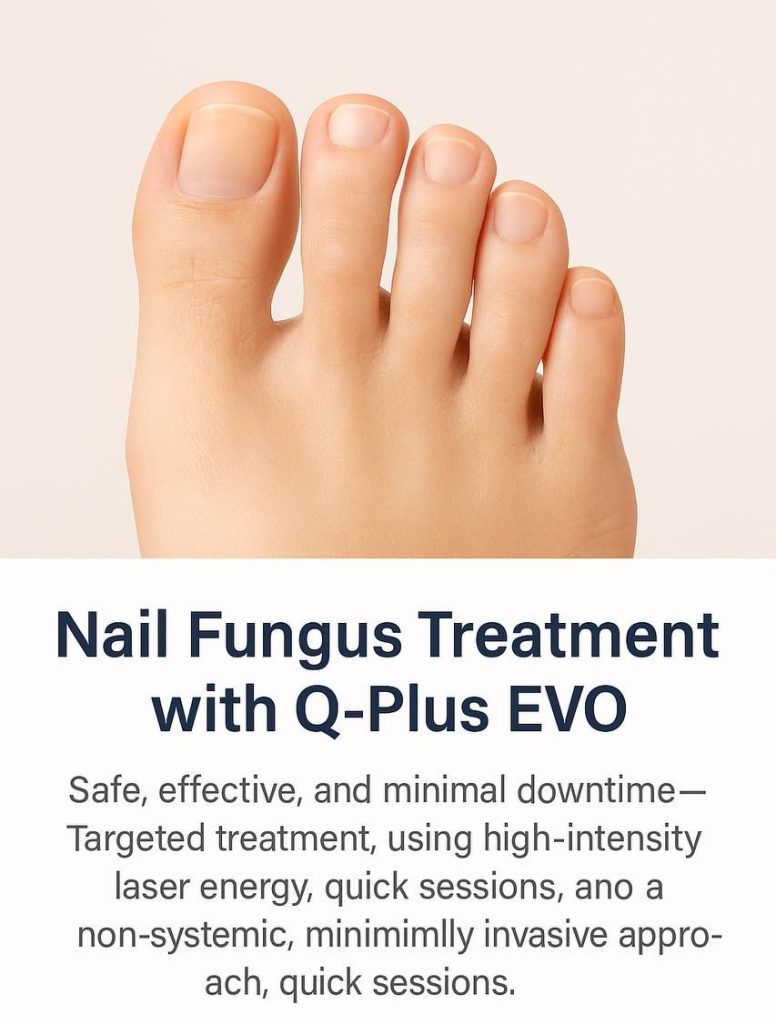
What is Onychomycosis (Nail Fungus)?
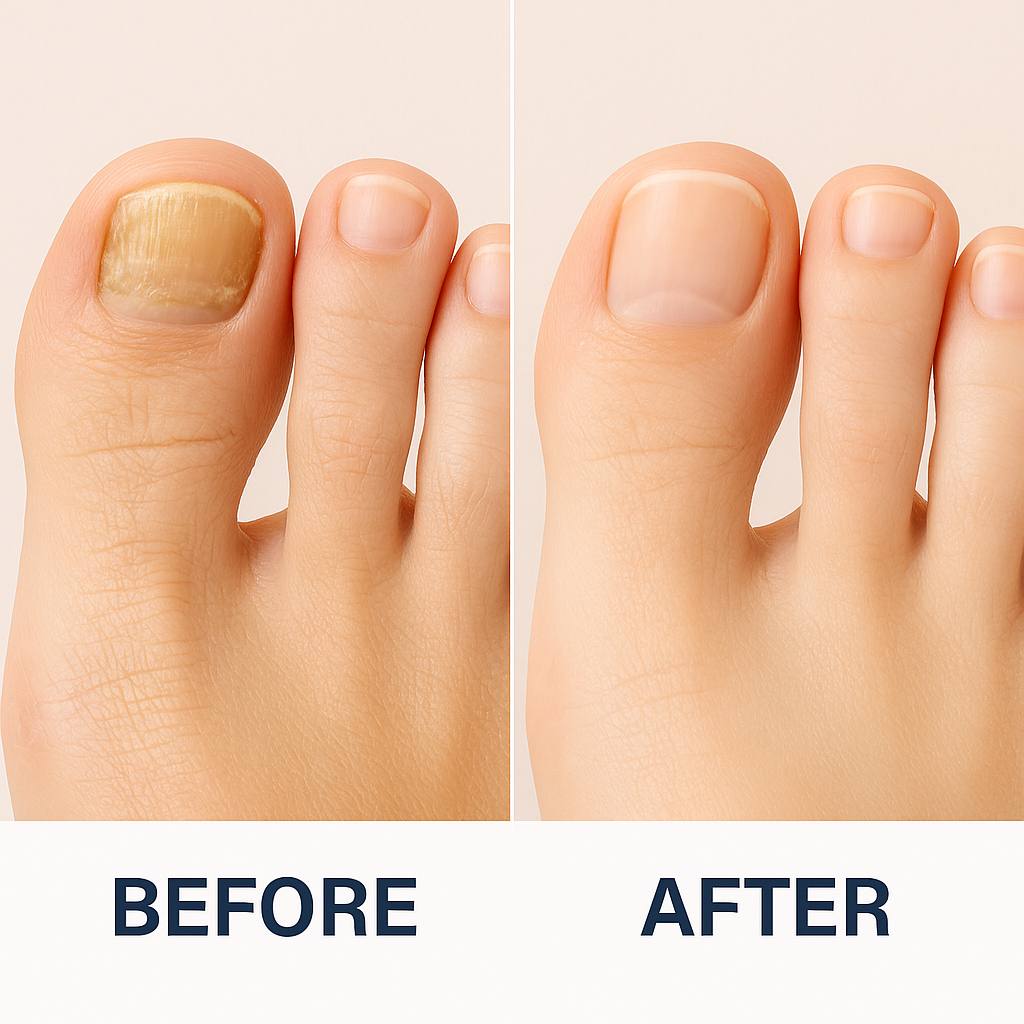
Onychomycosis is a fungal infection of the nail plate and/or nail bed. It can cause your nails to become thickened, discolored (yellow, white, brown), brittle or crumbly, and may even separate from the nail bed.
Traditional treatments such as topical creams and oral medications often require long durations and may carry systemic risks.
Why Choose Laser Therapy with Q-Plus EVO?
Our clinic uses the Q-Plus EVO system — a state-of-the-art, multi-wavelength Q-switched laser platform originally developed for dermatological and foot conditions, including “skin and nail” indications.
Here’s how it stands out:
Targeted treatment: The device delivers high-intensity laser energy (e.g., Nd:YAG 1064 nm wavelength) that penetrates the nail plate and targets fungal cells beneath, while sparing surrounding healthy tissue.
Non-systemic & minimally invasive: Unlike oral antifungals (which may carry liver risks), laser treatment localizes therapy to the nail, reducing systemic exposure.
Short sessions & quick recovery: Treatments typically take only 10–30 minutes depending on the number of nails treated. You can resume normal activities immediately.
Advanced laser technology: The Q-Plus EVO features OptiBeam II® handpieces that deliver a “flat-top” beam profile, ensuring uniform energy delivery and reducing hot spots — improving safety and comfort.
What to Expect: The Treatment Process
Consultation: We’ll assess your nails, evaluate the extent of fungal involvement, and determine suitability for laser treatment.
Preparation: Nails should be clean and free from polish. In some cases, thickened nails may be gently thinned before treatment to improve laser penetration.
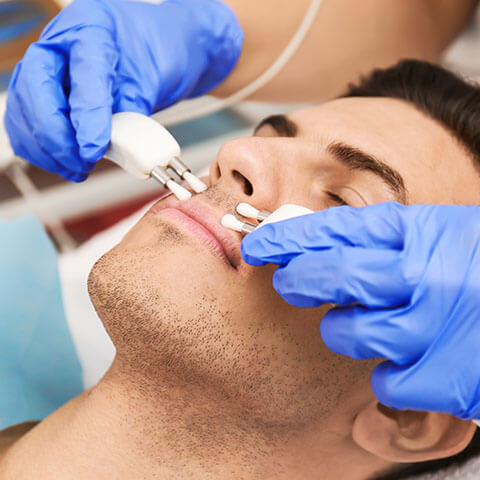
Laser session: Using the Q-Plus EVO laser, focused pulses are applied to affected nails and surrounding nail bed. You may feel a gentle warming or snapping sensation, but discomfort is minimal.
Post-treatment care: No significant downtime is required. Some mild warmth or redness may occur but typically resolves quickly. You can return to normal footwear and activities. For optimal results, you’ll receive advice on foot hygiene (e.g., keeping shoes dry, changing socks frequently) to reduce reinfection risk.
Follow-up: Nail regrowth is gradual; visible improvement may appear within months. Full results depend on nail growth rate and severity of infection. Additional sessions may be recommended for deeper or long-standing infections.